20 genius ways to get and stay healthy
We asked members of our own dedicated and talented team of Matrix clinicians to share their best advice on how to live healthier, happier — and even longer.
There’s a lot of health advice floating around out there. You can read about it in the news, see it on TV, and maybe you even have friends who regularly share their own tips for healthier living. It can be hard to know which advice to follow, and it’s very easy to tune all of it out.
Making changes to your daily routine isn’t always easy. But taking steps to improve your health and well-being is well worth the effort. According to a Harvard study spanning three decades, people who maintained the healthiest lifestyles were 82% less likely to die from cardiovascular disease and 65% less likely to die from cancer than those with the least healthy lifestyles.
To help you get started on a new path to wellness, we asked some of our top Matrix clinicians who lead in-home health and wellness assessments to share their best advice about how to improve diet, sleep, physical activity, mood, and overall health.
Easy ways to eat healthier
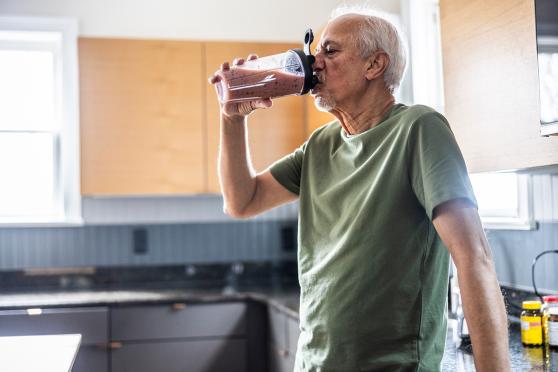
“To prevent overeating, turn off the TV and minimize distractions. Taste each bite of food you put into your mouth. Do not preload your utensil with your next bite. Take the bite and put all utensils down. Just sit, chew, and enjoy the delicious food as it nourishes your body.” — Ashley Bannon, DNP, NP-BC, a doctor of nursing in Hope Valley, Rhode Island
“If you have diabetes, one of the best things you can do to help improve your blood glucose control is have a snack before you go to bed. A small bowl of yogurt or cereal, a piece of peanut butter toast, or a hard-boiled egg and a slice of toast can help your body fuel while you sleep and decrease your chance of low blood sugar readings in the morning. It can also help lower your A1C by keeping blood sugar levels more even.” — Pam Eliason, FNCP-BC, a family nurse practitioner in Summerville, South Carolina
Recommended reading: 14 foods that spike blood sugar (and what to eat instead)
“As we age, our iron levels may decrease. That can lead to anemia, which can give you a headache or make you feel tired or dizzy. Consider including iron-rich foods like spinach, lentils, and dried apricots in your diet to help maintain adequate iron intake.” — Patricia Wells, FNP-BC, a family nurse practitioner in Detroit, Michigan
“Most of your snacks and food should be coming from the fridge, where we keep fresh fruits and vegetables. Eat less from the pantry, which is mostly man-made foods full of chemicals and carbohydrates.” — Mary Nunziata, MSN, NP, a nurse practitioner in Cumming, Georgia
“The key to not eating unhealthily on a regular basis is not to buy or store those foods and drinks in your home. Instead, when you have a craving, buy an individual pack of chips, cookies, or whatever you like in moderation. That way it’s one and done!” — Tracy Jones, APRN, FNP-C, a family nurse practitioner in Shelton, Connecticut
“When you’re trying to stay healthy or lose weight, try to prioritize eating from the Earth. That means eating protein, fruit, and veggies. Those foods will nourish your body and are less likely to cause weight gain. People don’t generally become overweight sitting on the couch eating too much broccoli.” — Mary Nunziata
A Matrix in-home health and wellness assessment is a good time to discuss healthy habits with a licensed clinician — plus, it’s part of your plan! Call 877-302-3672 877-302-3672 to schedule.
Smart fixes for better sleep
“Pick a set time to get into bed each night. Strive for the same time or within an hour of it. Avoid any screen interaction — TV, tablets, phone — for at least one hour prior to going to bed. The light from those screens disrupts sleep.” — Tracy Jones
“Sometimes when we go to bed, it’s difficult to shut off our brains. We lay in bed worrying about the things we need to take care of the next day. Keep a pen and notepad at your bedside. If you have a task for the next day tumbling in your head, simply write it down. That way you can put the worry to bed, and you can get some sleep.” — Mary Nunziata
“Getting enough sleep isn’t just about not feeling tired. It’s restorative for your muscles and your brain to get ready for another day. Aim for a consistent seven to nine hours every night.” — Patricia Wells
“If you have difficulty sleeping due to stress, worry, and a brain that won’t shut off, it may be a symptom of anxiety. Rather than taking a sleep aid and putting a Band-Aid on the issue, you might benefit from asking your doctor about taking an anxiolytic antidepressant. These are a class of antidepressants that work well for anxiety. It can be taken daily and won’t become an abuse or dependence issue like some sleep aids. Treating underlying anxiety may allow you to sleep better.” — Mary Nunziata
Clever tips for exercising more and preventing falls
“When you’re first starting an exercise plan, set a small goal you know you can accomplish. Let’s say you write down that you’ll exercise once or twice a week for 10 minutes at a time. Remember, exercise is anything EX-tra in addition to your daily routine. It all adds up.” — Tracy Jones
“The exercise goal is 30 minutes most days of the week. If you work out at a gym and get bored easily, do 5 to 10 minutes each on different machines. If you have a set of floor pedals in the home ($20 to $30 for a basic model) you can pedal while you watch your favorite TV show. Or during the commercial breaks. You could also take the floor pedals and set them on a table to do arm exercises.” — Mary Nunziata
“When starting to walk for exercise, set your phone alarm for five minutes. When it goes off, turn around and retrace your steps home. Regardless of how far you get, that is 10 minutes of exercise. Depending on how you feel, you may get to the end of your street, or you may get three houses down, but you are still exercising for 10 minutes!” — Pam Eliason
“Mix things up a little. Walking backward once a day for a few minutes improves balance and reduces fall risk.” — Patricia Wells
“You can make walks more fun by getting outside and going for what I call a ‘rainbow walk.’ As you walk, try to find something of every color of the rainbow: red, orange, yellow, green, blue, indigo, and violet. Do it for 20 minutes a day whether it’s sunny, hot, cold, or rainy. If you are just starting out, aim for 5 to 10 minutes. Walk around your yard or neighborhood without music, but you can bring your pets and family.” — Ashley Bannon
Recommended reading: Easy exercises to fall-proof your body from head to toe

Don’t miss your chance to book your no-cost in-home visit
We’ll bring the clinician to you!
Bright ideas for improving your mood
“Exercise isn’t all about weight loss or heart health. It can also boost the production of the happiness hormone dopamine. That promotes overall well-being and mood as we age.” — Patricia Wells
“When you are feeling overwhelmed or stressed, sit down, close your eyes, and breathe. Breathe in through your nose for four seconds, hold your breath for seven seconds, and exhale through pursed lips like you’re blowing out a candle for eight seconds. You can do this for four to eight rounds. This will help move your body into a state of relaxation.” — Ashley Bannon
Recommended reading: 5 science-backed ways to boost your mood
Simple strategies for socializing more and asking for help
“We know that socialization leads to stronger cognitive health. We see higher incidents of dementia in people who lack social opportunities. Senior centers can be a wonderful place to make connections. Many offer free transportation, meals, art and exercise classes, and other activities for their members. Most senior centers also offer outings to museums, ball games, and botanical gardens.” — Mary Nunziata
“I frequently see members who may need a bit of help with a drive to the doctor or the grocery store occasionally, but they are reluctant to accept help from neighbors or their church family who have offered. I remind them that the person offering help may need the blessing of being useful to another person, and that they could help them achieve that. Reframing it as being helpful to the other person can make you less reluctant to accept assistance.” — Pam Eliason
“Your local library often has activities throughout the month: a book club, arts and crafts activities, guest lectures, film festivals — and all of them are free. Did you know that your local library will often have free passes to places like local theaters and museums? At many libraries, you can even check out more than books: fishing poles, art supplies, musical instruments, tools, board games, and puzzles.” — Mary Nunziata
Recommended reading: Why social connections are so important — and how to make new ones
See our sources:
Lifestyle tweaks and longevity: Circulation